Cloud Analytics for Health Information
Daily data cube rebuilds replaced with on demand reporting on a HIPAA compliant Azure data platform, adding peer benchmarking for providers.
Websites & Applications
We build and improve SaaS products, from APIs and data models to cloud deployment, monitoring and release processes.
Built around your needs

Illustrative work context.
A SaaS product may need to support more customers, new features or more frequent releases. We help teams assess the existing platform and define the work needed for the next stage.
We review service boundaries, API behavior, data ownership and usage patterns. This helps identify which constraints need architectural changes and which can be addressed through focused improvements.
We plan the platform around defined requirements and expected usage. The work includes implementation, testing, deployment and monitoring, with clear ownership for changes after launch.
What the engagement can include.
We design APIs that are stable, well versioned, and easy to consume across teams and external partners. Integrations are built with failure handling in mind, not best case assumptions.
We move SaaS platforms to the cloud in a way that reduces risk and downtime. The focus stays on reliability, cost control, and operational clarity.
We build core SaaS platforms that support lasting growth. This includes architecture, data models, and deployment workflows that don't slow teams down over time.
The healthcare case describes a cloud data platform enhancement. The ecommerce testing case is adjacent performance work, not a documented SaaS build.
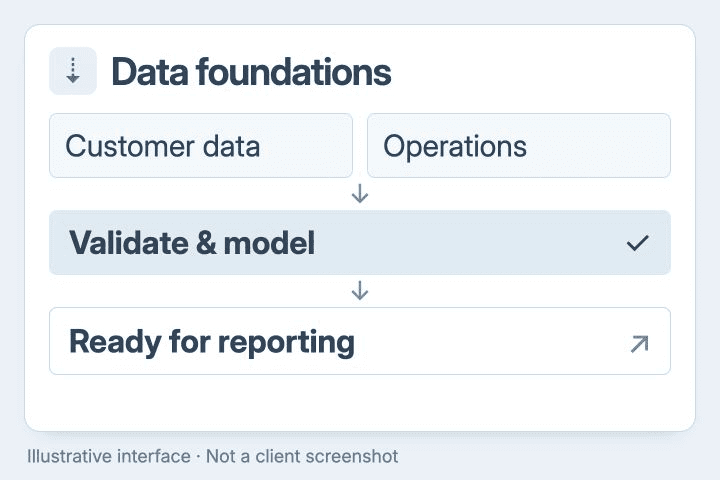
Daily data cube rebuilds replaced with on demand reporting on a HIPAA compliant Azure data platform, adding peer benchmarking for providers.
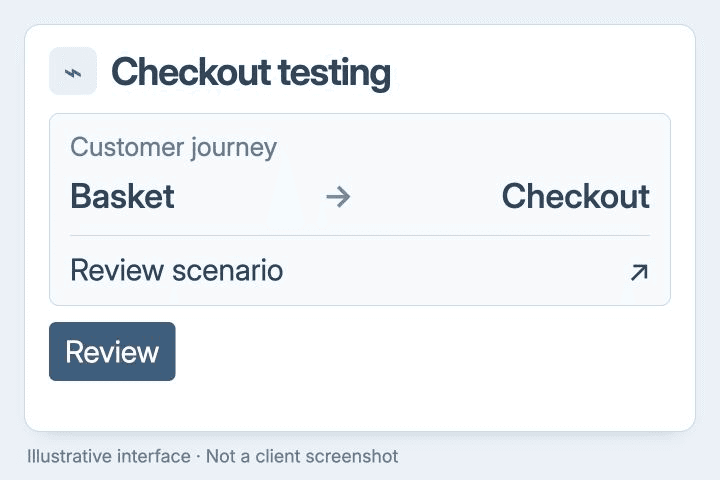
A reusable performance testing environment, reliable baselines and a roadmap the agency can keep using as ecommerce traffic grows.
We review how the current system behaves under load and change. Weak points are identified before new work starts.
Architecture decisions are made with future growth in mind. Trade offs are discussed openly.
Changes are introduced in controlled steps. This keeps risk low and feedback fast.
After launch, performance and reliability are reviewed using usage data, monitoring and customer feedback.
Product requirements guide the platform, from account access and integrations to releases and daily operation.
B2B software
Keep accounts, permissions and workflows clear.
A business product may serve several organizations and user roles. We define tenant boundaries, access rules, integrations and operating requirements before expanding the platform.
Fintech
Make API behavior and exception handling explicit.
Financial products can depend on several external services. We review transaction states, access controls, retries and audit requirements with the teams responsible for the product.
Health technology
Plan access and review around the intended use.
Health technology products need clear data ownership, permissions and operating procedures. Requirements for privacy, integrations and system availability are considered during design and testing.
Listed to show fit with existing environments. Tools are chosen per project; a listing is not a partnership claim.
Tell us about the product, the changes you are planning and the constraints you need to address.