
Adding AI to a product, responsibly
AI features need clear use cases, review paths, and ownership. The product should be easier to use, not harder to explain.
Better data work starts with the decisions people need to make, then works backward to the data, pipelines, and tools.

Data projects can become crowded quickly. Teams collect more sources, build more dashboards, and add more definitions, but the decisions do not always become clearer. The problem is rarely a lack of data. It is a lack of shared meaning around the data.
A useful data effort begins by asking what decision needs support. That sounds simple, but it changes the work. Instead of asking which dashboard to build, the team asks what question must be answered, who needs the answer, and what action follows from it.
This keeps the work from becoming a catalog of charts. The data model, pipeline, and presentation can all be shaped around a business question that people recognize.
Many reporting problems come from unclear definitions. Teams may use the same word to mean different things, or different words to describe the same event. When that happens, teams can interpret the same report differently.
Clear definitions do not make data perfect. They make the limits visible. That is often enough to improve trust and reduce repeated debate.
The definition work should include the people who use the data, not only the people who move it. A metric can be technically correct and still be unhelpful if the business question is different from the pipeline logic. Bringing those views together early helps the team find mismatches before they become reporting habits. It also gives future owners a record of what the report is meant to answer.
AI can be useful when it is connected to a clear workflow. It is less useful when it sits beside the work as a demo or side tool. The same rule applies as any other data effort: start with the decision or task, then decide where AI adds helpful support.
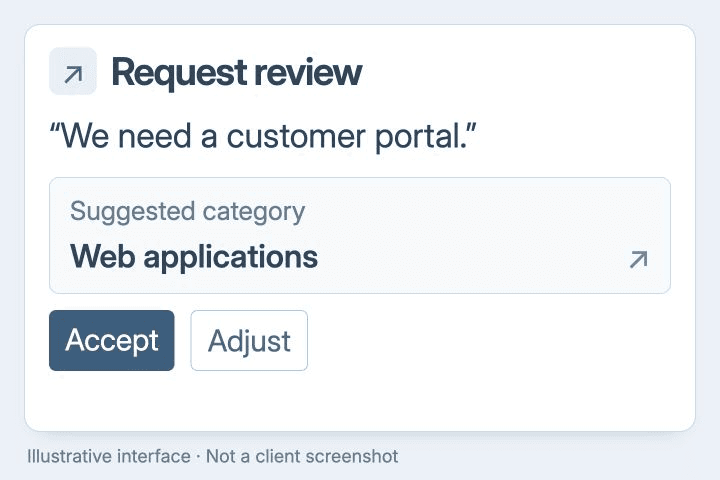
AI output needs a path into action. If the output is reviewed, routed, corrected, or stored, that path should be designed. Without that, people may test the feature once and then return to the old way of working.
Give reports and pipelines named owners, useful monitoring and documented definitions. Keep review points in AI workflows. When sources, definitions or business processes change, review the reporting with the people who use it so they can continue to interpret the results.
Need clearer reporting from your data?
ContactMore from Insights
AI features need clear use cases, review paths, and ownership. The product should be easier to use, not harder to explain.
A useful system supports the work, reduces unnecessary steps and can be maintained by the team that owns it.
A careful modernization path keeps useful behavior intact while replacing the fragile parts that slow teams down.