
Technology that fits how your business already works
A useful system supports the work, reduces unnecessary steps and can be maintained by the team that owns it.
A careful modernization path keeps useful behavior intact while replacing the fragile parts that slow teams down.
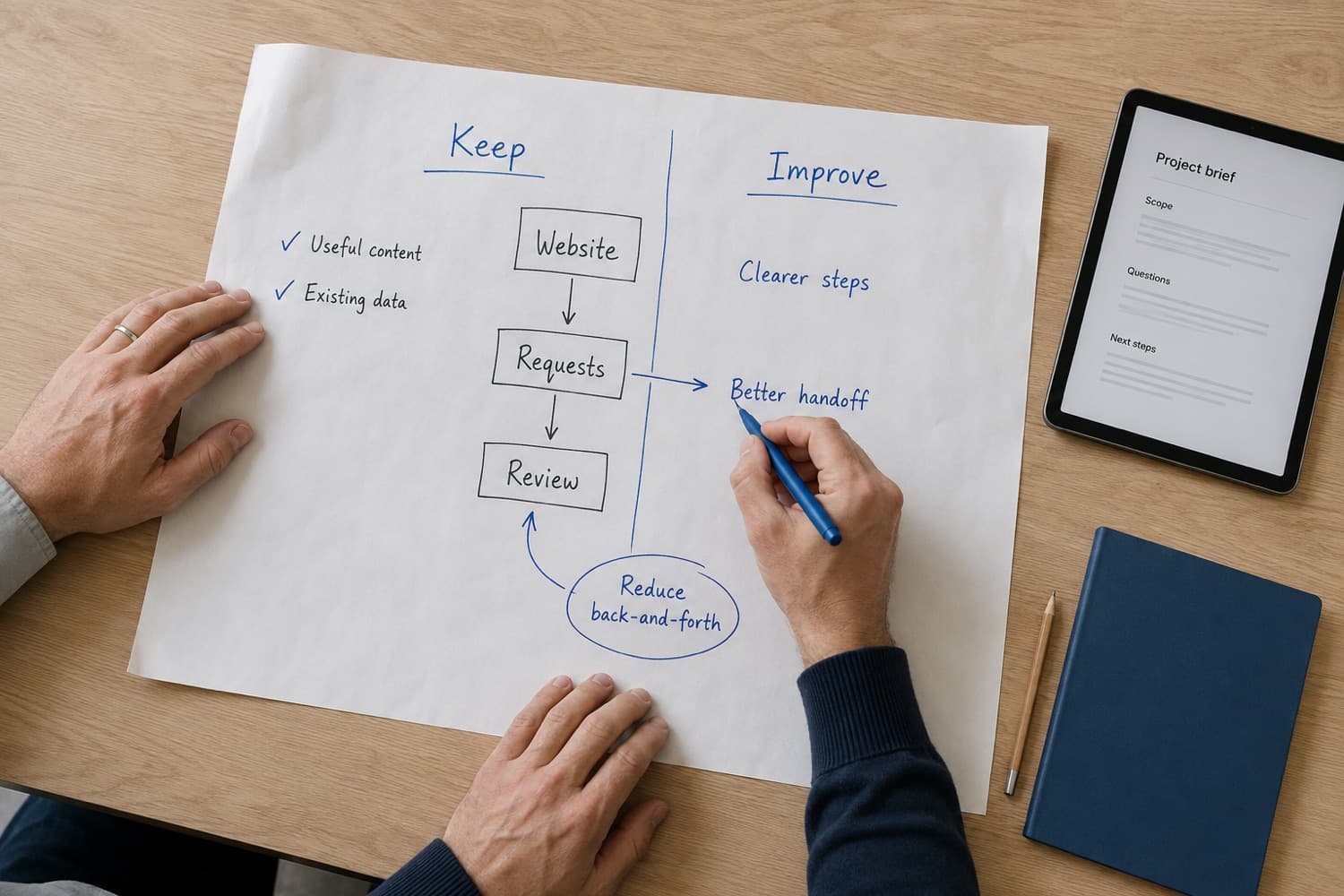
Modernization gets harder when the existing system still does important work. It may be slow, hard to change, or poorly documented, but it also carries business rules that people depend on. Replacing it too quickly can create new problems that are harder to see than the old ones.
Before changing a system, identify the parts that still earn their place. That might be a workflow, a data model, a report, or a permission pattern. Teams often know these details, but they are scattered across conversations, tickets, and habits. Pulling them into the open changes the project from a rewrite into a controlled improvement.
Useful behavior should be written down in plain language. The goal is not to preserve every screen or field. The goal is to preserve the business meaning behind them so a new version does not lose important context.
A strong modernization plan avoids changing too many things at once. It gives the team a path to improve a system without forcing every workflow through a single risky release. Smaller boundaries make it easier to test, easier to explain, and easier to reverse if a choice does not hold up.
Clear boundaries make a complex change easier to review. Everyone involved can see what is changing, what is staying put, and what needs a decision.
Readable work is easier for nonspecialists to review. A finance lead may not care how a service is deployed, but they do care whether reporting terms stay stable. An operations lead may not care which queue is used, but they do care whether orders still move through the right checks. Keeping the change boundary clear gives each stakeholder a way to review the part that affects them without being pulled into every technical detail.
Teams often treat documentation as the final task. That is a mistake. The details that matter most are created while the work is happening: why an integration was shaped a certain way, what assumptions were made about data, which alerts matter, and where exceptions should go.
Modernization is not complete until the next owner can explain it. Runbooks, diagrams, and plain language notes give the in house team a way to keep improving the system without starting over each time a new question comes up.
Clear service boundaries, documented dependencies and named owners make later changes easier to assess. Review a proposed workflow, integration or product requirement against those boundaries so its scope and testing needs can be agreed without reopening settled decisions.
Planning changes to an existing system?
ContactMore from Insights
A useful system supports the work, reduces unnecessary steps and can be maintained by the team that owns it.
Good documentation explains ownership, decisions, dependencies, and recovery paths without burying teams in unused detail.
Cloud work should match the way usage changes, the way teams operate, and the way costs are reviewed.